

Inventing the Alive and the Dead
Step into the quiet halls of a museum and you enter a space where time stops and the boundaries between nature and culture blur. This is the museum twilight zone, a limbo where dead animals are caught between two conflicting identities. “Performing the Animal Limbo” is the process by which institutions actively manufacture these two separate realities. It is a staged drama that dictates how we are supposed to feel about the creatures on display.
In the world of natural history, taxidermy is treated with a kind of magic. Curators strive to make a bird look as if the living body is still inside the feathers, turning it into a “natural” masterpiece that represents its entire species. Here, the animal is effectively “alive” in spirit. However, move that same bird onto a hat in a fashion gallery, and the magic disappears. Suddenly, the animal is “dead.” It is no longer a specimen; it is a bird corpse, a carcass, or a massacre.
This article examines the linguistic and visual strategies museums use to perform this divide in past exhibitions. Curators use a semantic magic trick with a long history and cultural logic: by labeling the scientific bird a skin and the fashionable bird a corpse, they create a state of cognitive dissonance. They force viewers to see the “scent of death” in fashion while keeping the research drawers “clean.” By comparing their specific approaches—from the “prosecutor” style of social critique to the “apology” of the art gallery—we can see how the vestimentary animal is manipulated to fit modern moral narratives, often at the expense of fashion’s original meaning
The Performance: From Science to Scandal
The museum twilight zone is not just a place where objects are stored; it is a stage for a choreographed drama of life and death. In the world of natural history, institutions like the Smithsonian Institute and Munich’s Museum Mensch und Natur treat taxidermy as a protective magic. At the Smithsonian, 600,000 “bird skins” are kept behind closed doors, remaining effectively “alive” as scientific specimens exempt from moral scrutiny. Munich’s curators even frame living Birds of Paradise as the “top models” of nature during their “Rainforest Walk.” However, the moment these same feathers move into a fashion context, the labels flip. The Smithsonian’s public materials warn against wearing “dead birds,” and Munich relabels the exact same feathers as “Paradise bird corpses” when they appear on a historical hat.
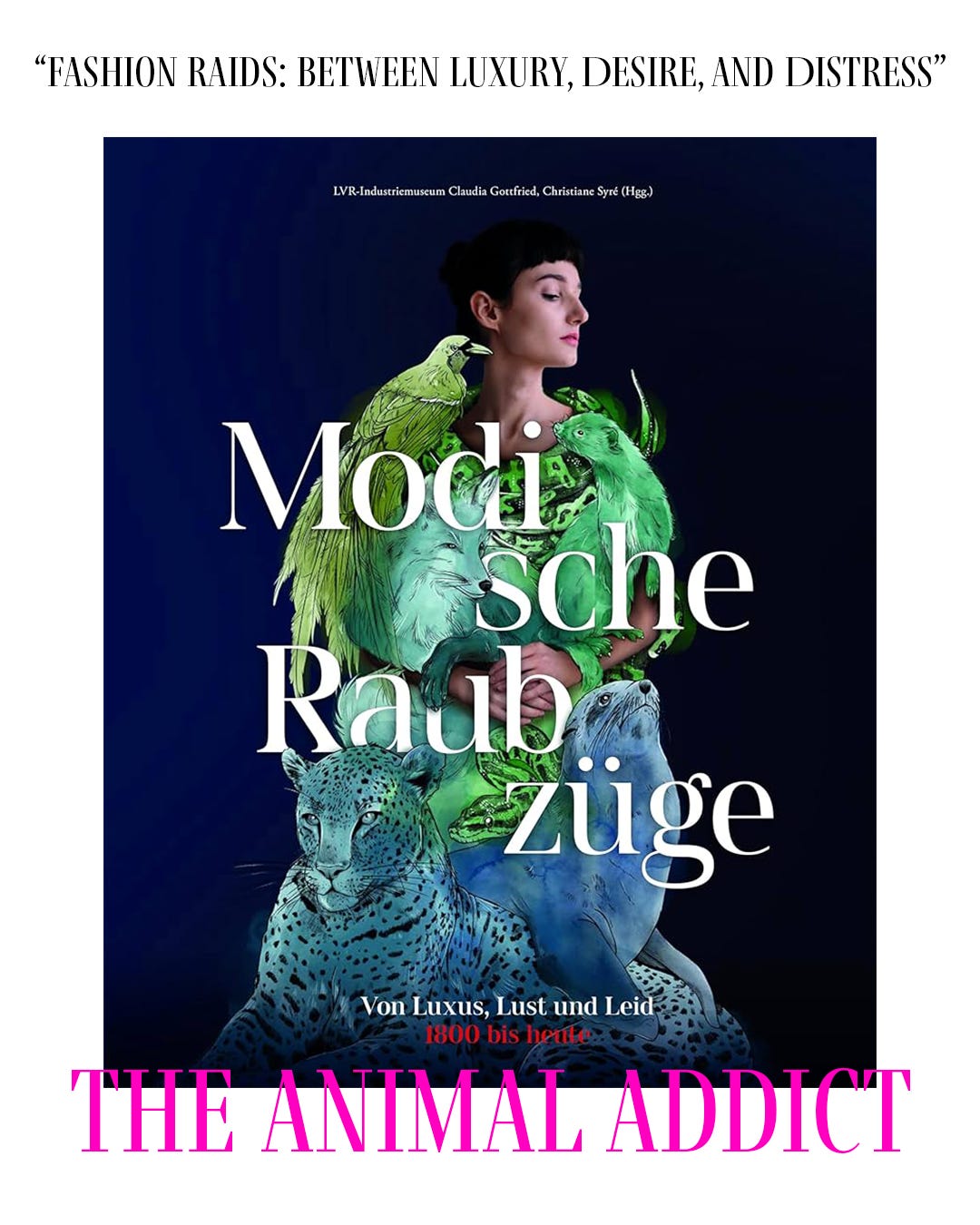
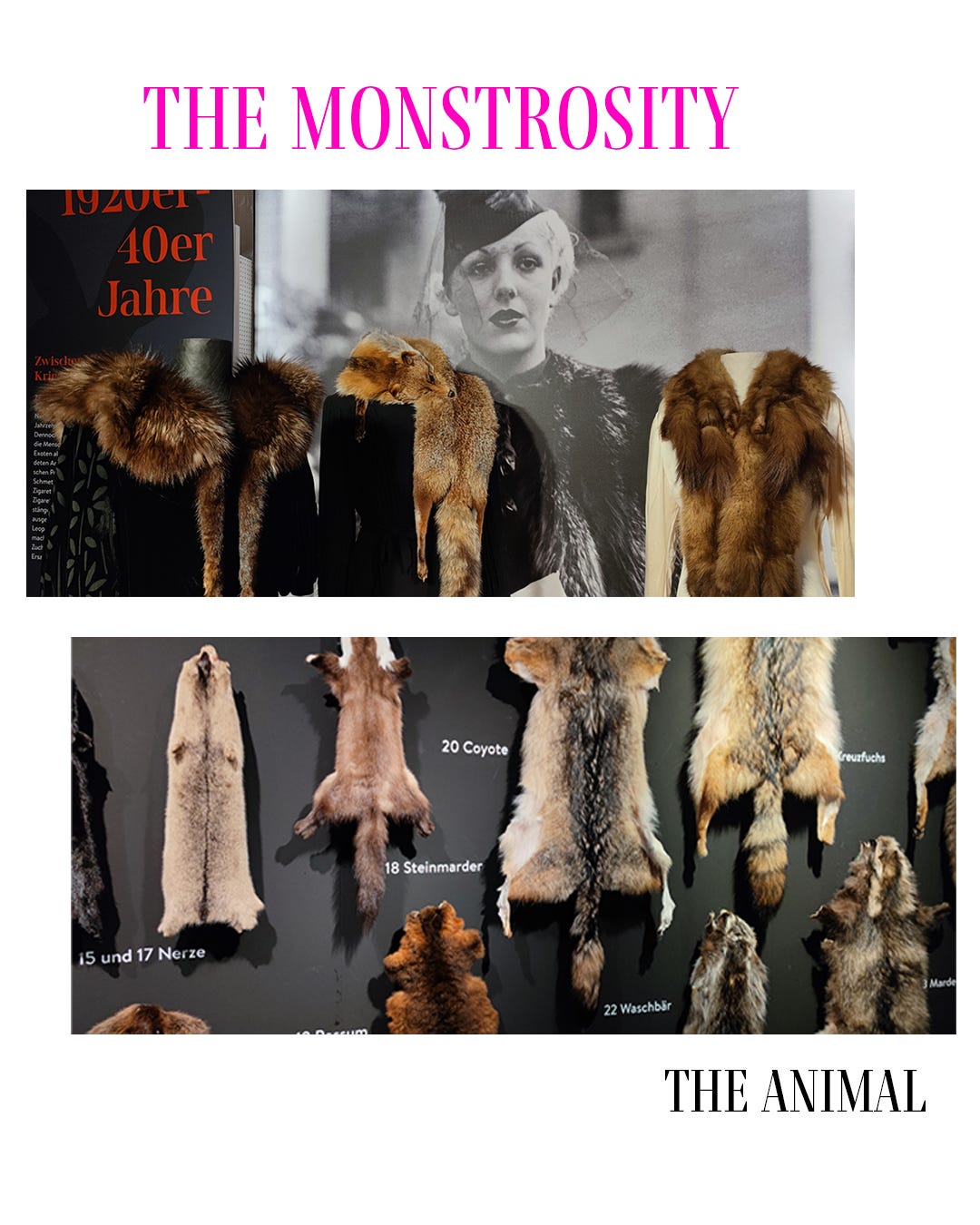
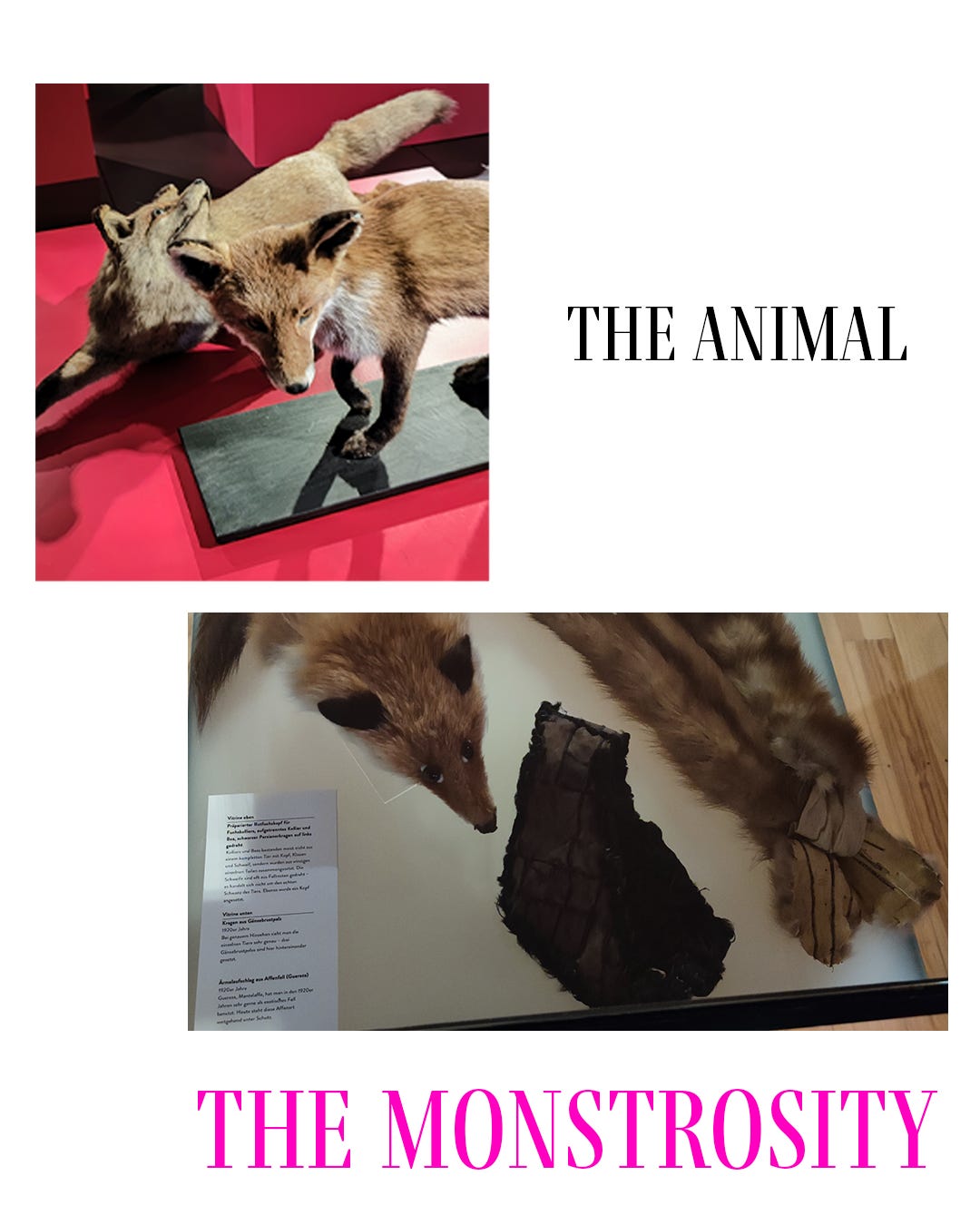
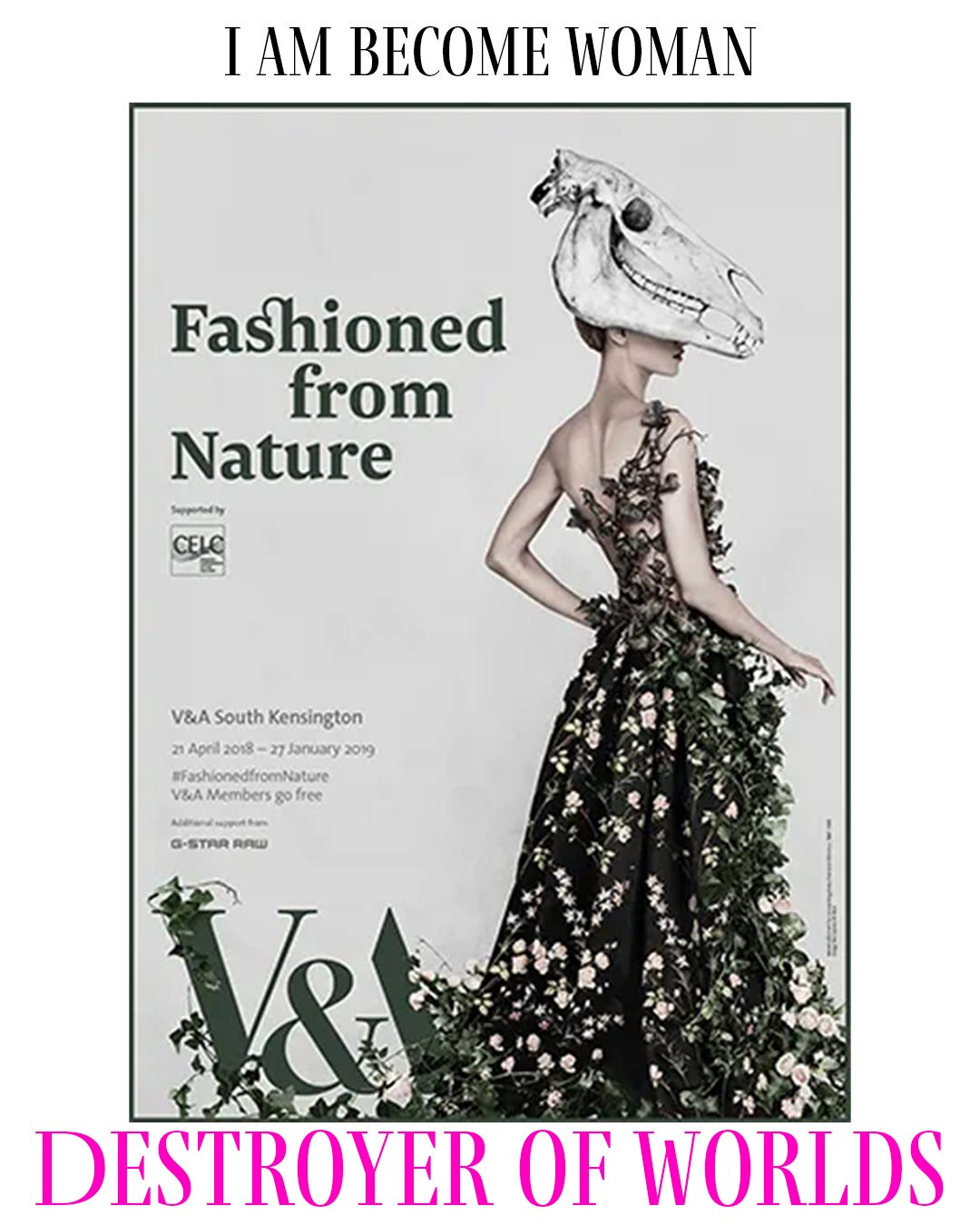
When museums choose to tackle fashion directly, they often shift from being collectors to being prosecutors. The Textilfabrik Cromford in Ratingen utilizes “animal texts” to provide creatures with biographies long before they were exploited by industry for their Fashionable Raids, framing hats as a “massacre on the head.” All the while taxidermy is presented at “the animal” in the center. The Victoria & Albert Museum in London takes a similarly critical approach in Fashioned from Nature, placing luxury pieces directly next to raw fibers and taxidermy to force a confrontation with the “origin of clothing.” By asking “What has really changed?”, they imply modern consumption is simply a continuation of historical “raids” on nature.
Other institutions act as therapists or apologists. The Übersee-Museum Bremen tried to “heal” the tension in its Federn kitzeln die Sinne exhibition by focusing on the “feathered friend” to resolve the conflict between lady’s fashion and bird love. Meanwhile, the Museum Ludwig in Cologne uses the “trigger warning” for the artist Ursula. By distancing themselves from the fur industry at the door while displaying pelts inside, they perform a classic limbo move: displaying the animal as art while formally disavowing the ethics of its death.
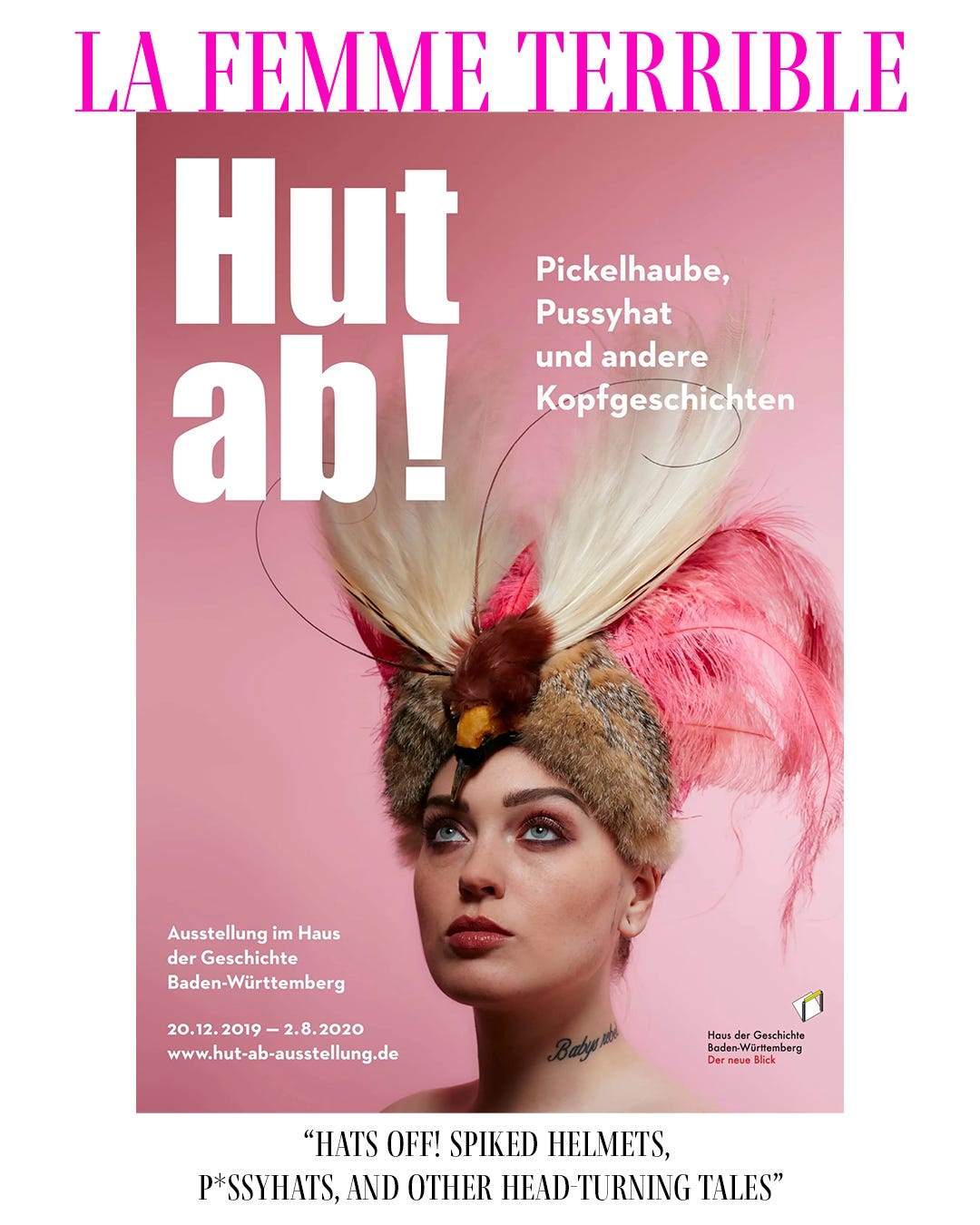
Perhaps the most aggressive strategy is “moral segregation,” seen at the Haus der Geschichte in Stuttgart. Their exhibition split history into two boxes: “robbery-murder” for animal-heavy fashion and “Equality” for the suffragette movement. To keep the narrative of political progress clean, they displayed feather-free hats for feminists, ignoring the historical reality that many activists proudly wore the very ostrich plumes the museum now labels as murderous. The only true exception is Andrew Bolton at The Met, who views the animal as a “vestimentary text” through designers like Alexander McQueen. However, this lens often falls into a Freudian trap, treating the animal as a psychological “fetish” or a “sexual trigger” for the femme fatale rather than engaging with the social reality of the animal’s death.
The Visual Cage: Women as Predators
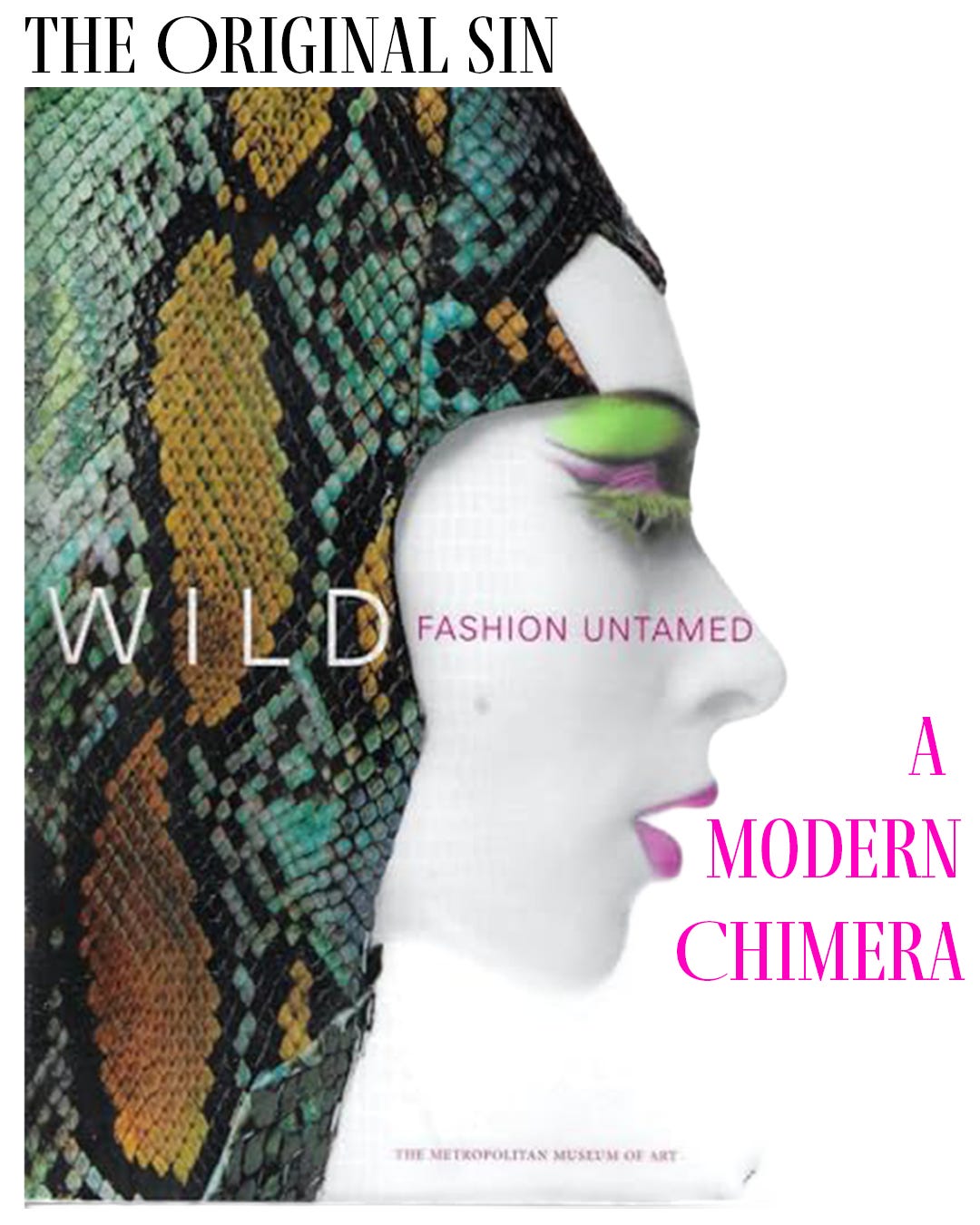
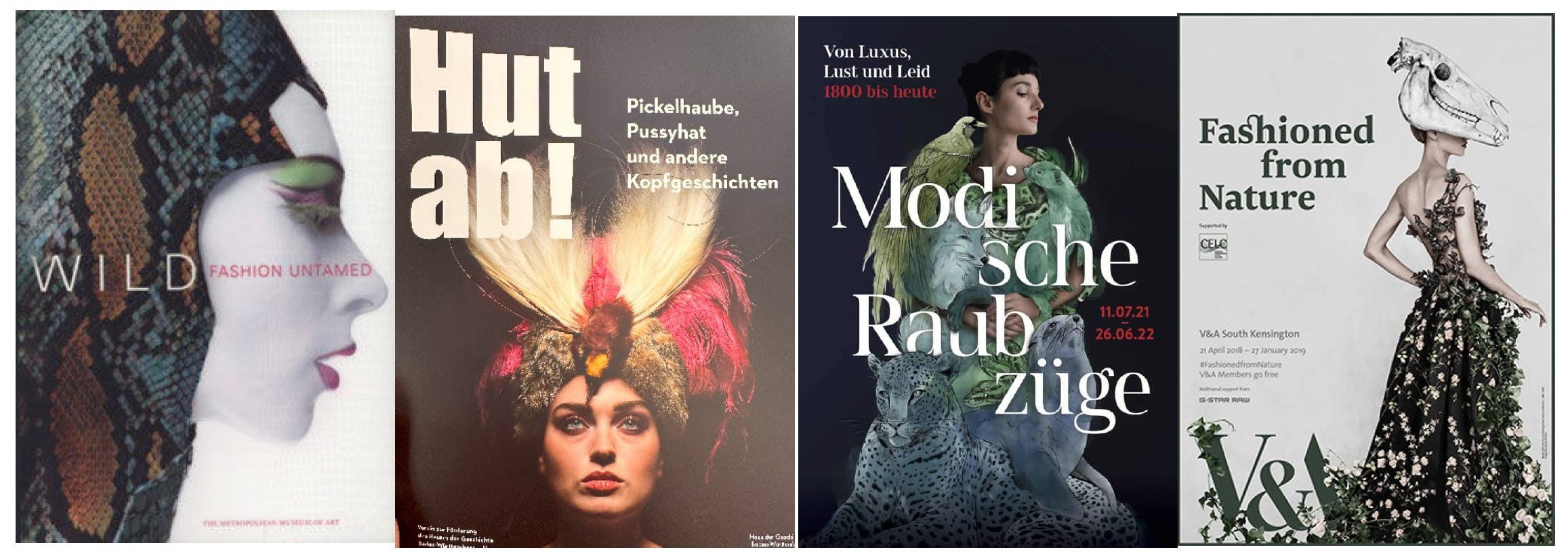
The visual design of these exhibitions reinforces the limbo by explicitly merging the female body with animal artifacts. Cover art and posters frequently rely on the trope of the femme fatale or the “untamed” woman, painting the female consumer as a dangerous predator living at the expense of nature. This design choice implies fashion is a “raid” specifically perpetrated by women, secretly framing them as the primary culprits for nature’s destruction. Penelope Wickson noted in her critique of the V&A exhibition that this allows museums to shift the entire weight of ethical guilt onto women while ignoring broader industrial and scientific systems. Several exhibitions reinforce this narrative through their very titles:
Wild – Fashion Untamed (Metropolitan Museum of Art, New York)
Hats off! (Hut ab!) (Haus der Geschichte Baden-Württemberg, Stuttgart)
Fashionable Raids (Modische Raubzüge) (LVR-Industriemuseum Textilfabrik Cromford, Ratingen)
Fashioned from Nature (Victoria & Albert Museum, London)
Conclusion: Like Cures Like
There is a deep irony in how museums present themselves as the “remedy” to the cruelty of fashion. The museum is often framed as a place of sanctity and healing, a quiet sanctuary where dead animals are “saved” from the vanity of the closet and granted a kind of immortality in a glass case. In this narrative, the museum is where the animal lives forever as a sacred object of knowledge, while fashion is the place where it is merely used and forgotten.
The truth is that museums simply don’t want to “get” this fashion. By reducing these garments to evidence of a crime or a biological specimen, they strip away the complex cultural meaning of the vestimentary animal. In this limbo, the animals remain ambiguous, caught between being “living” science and “dead” decor. In contrast, the message against women is clear: they are the primary visible abusers of nature.
In Kathryn Lasky’s children’s book She’s Wearing a Dead Bird on Her Head!, a little boy stands before penguins in a museum to enjoy birds in the proper way. There is a reason there is no book called He is Hanging a Dead Bird on the Wall or Keeping it in the Diorama.
List of Exhibitions
Fashioned from Nature – Victoria & Albert Museum, London.
Modische Raubzüge (Fashionable Raids) – LVR-Industriemuseum Textilfabrik Cromford, Ratingen.
Hut ab! (Hats off!) – Haus der Geschichte Baden-Württemberg, Stuttgart.
Da bin ich, na und? – Museum Ludwig, Cologne.
Federn kitzeln die Sinne – Übersee-Museum, Bremen.
Paradiesvögel (Birds of Paradise) – Museum Mensch und Natur, Munich.
Wild – Fashion Untamed – Metropolitan Museum of Art, New York.
Savage Beauty – Metropolitan Museum of Art, New York.
Karl Lagerfeld: A Line of Beauty – Metropolitan Museum of Art, New York.