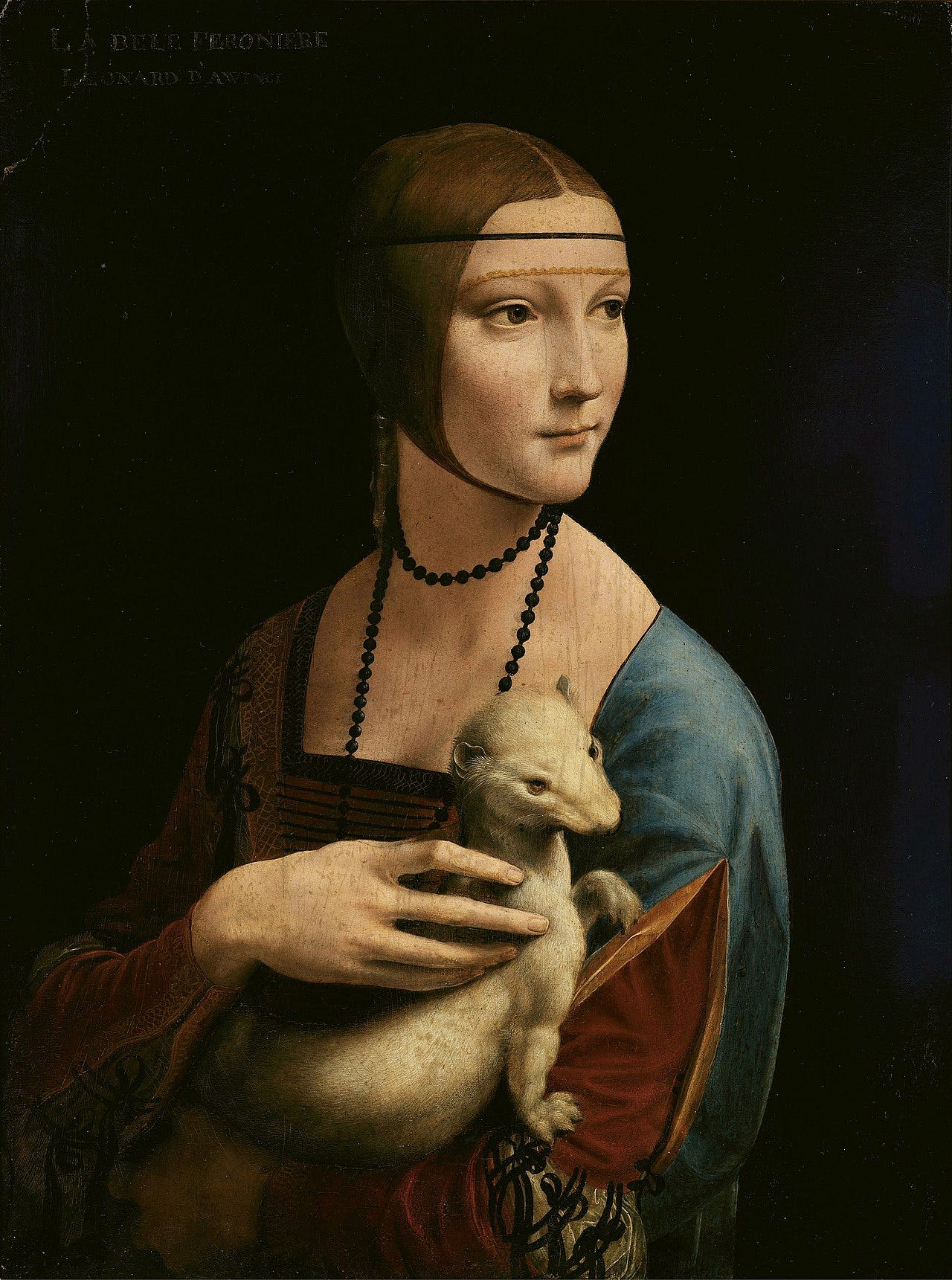
“Honey, is that an entire weasel?”
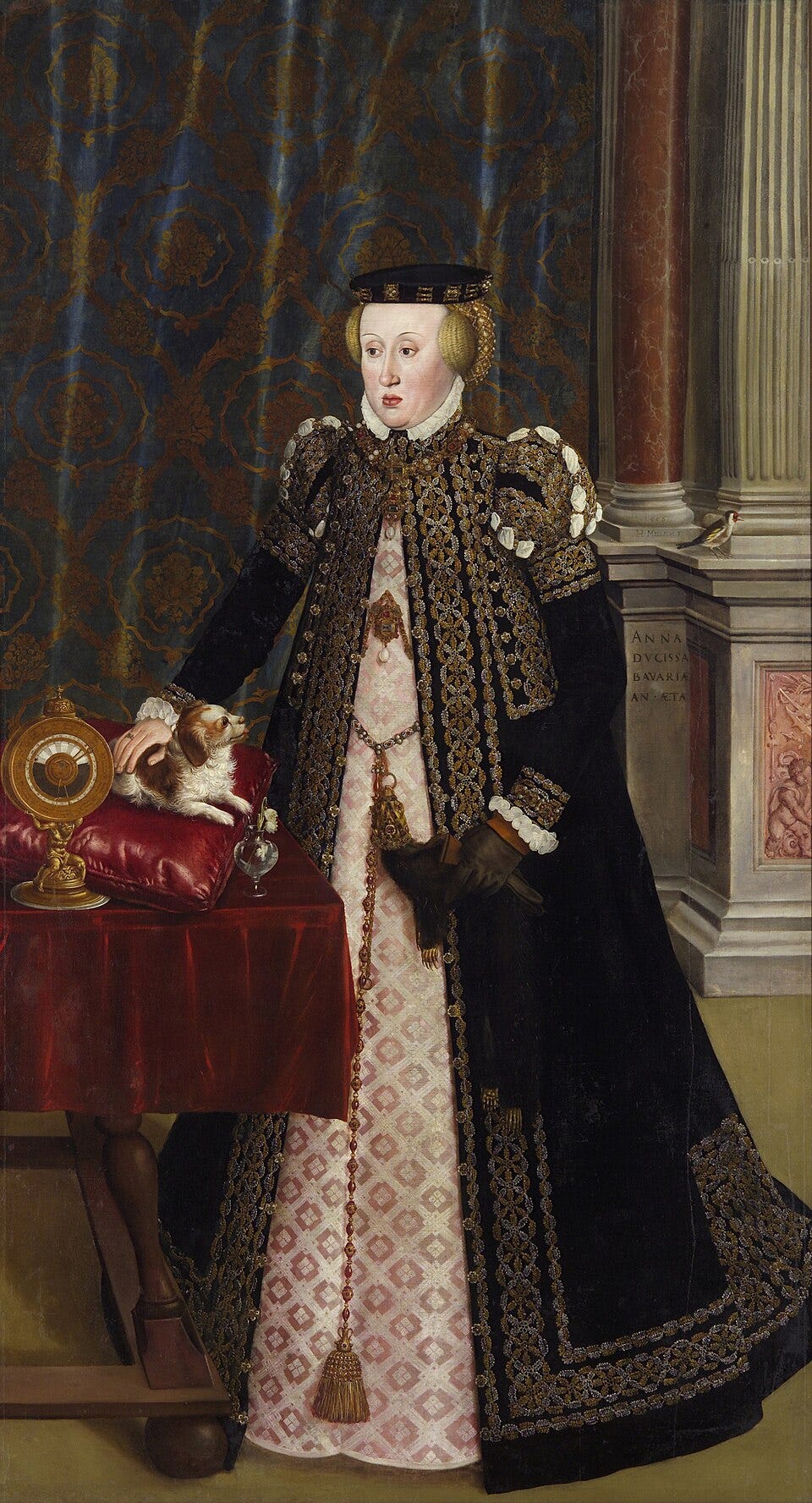
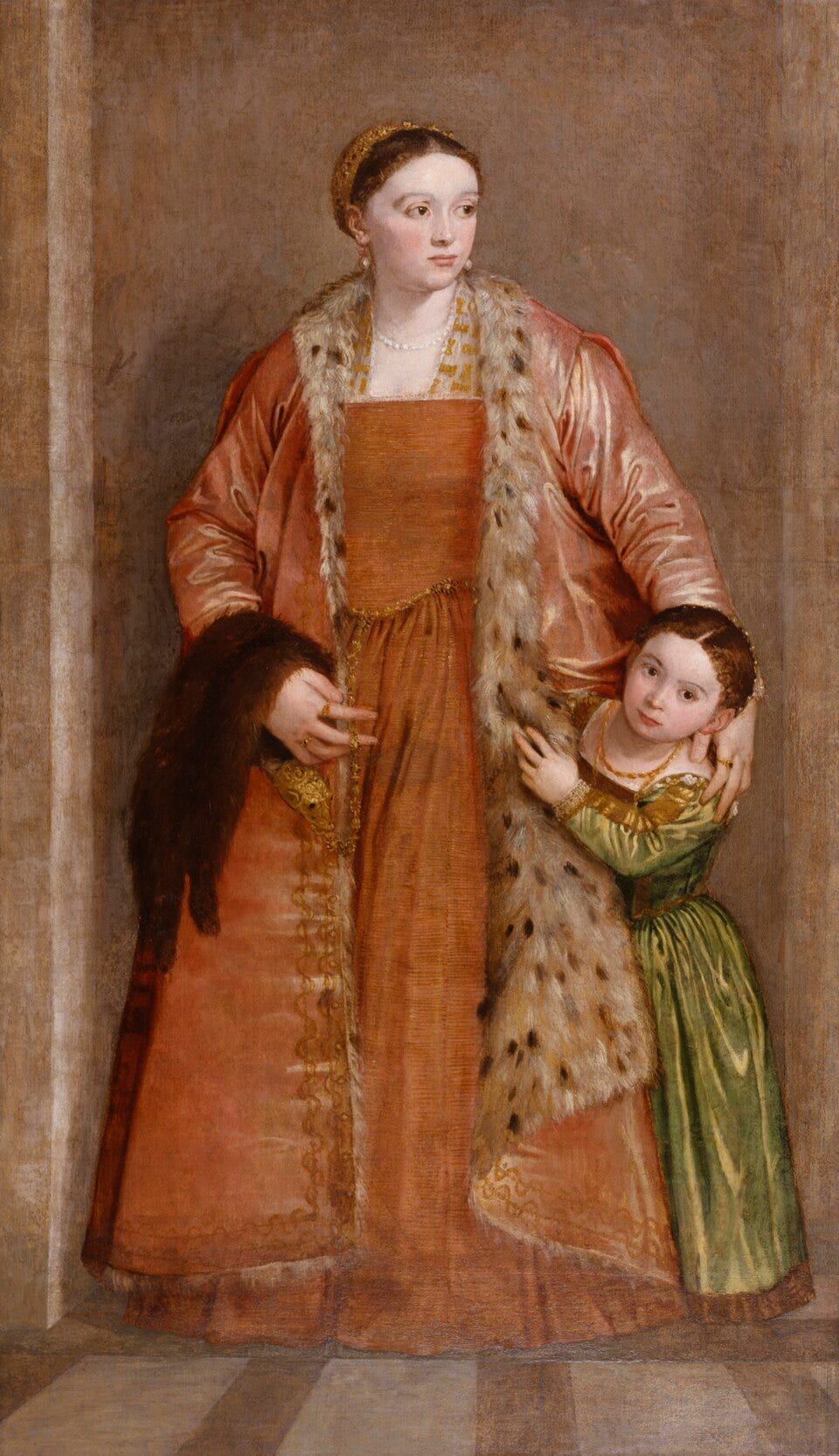
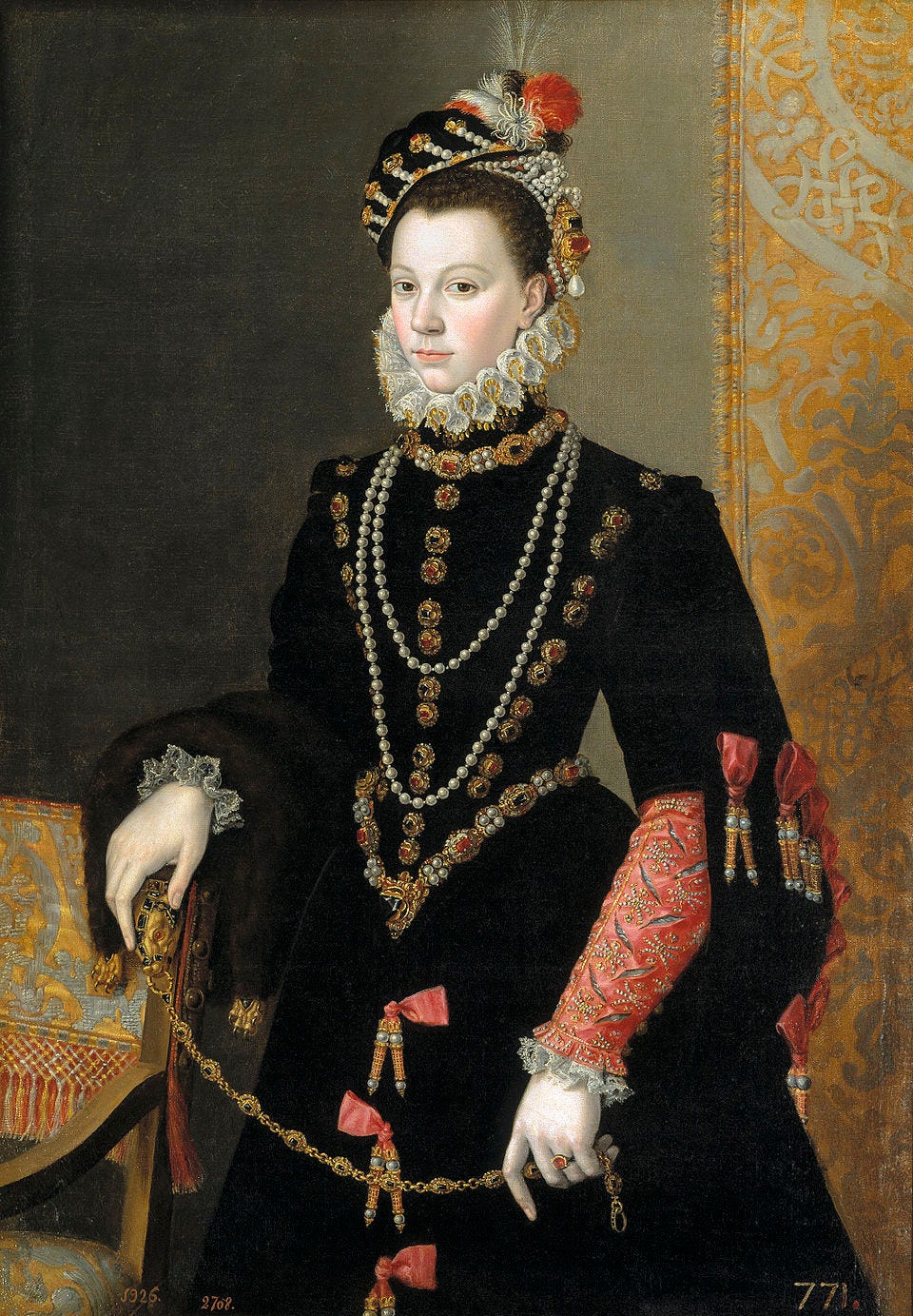
If you were to walk through the portrait galleries of any major art museum, you would eventually lock eyes with a rather peculiar 16th-century accessory. Draped over the arms or shoulders of aristocratic Renaissance women are the pelts of small animals—sables, martens, or ermines—with their heads and claws still intact. Often, these animal heads were lavishly recreated in gold or rock crystal, adorned with precious gems, and attached to the wearer’s dress with delicate gold chains.
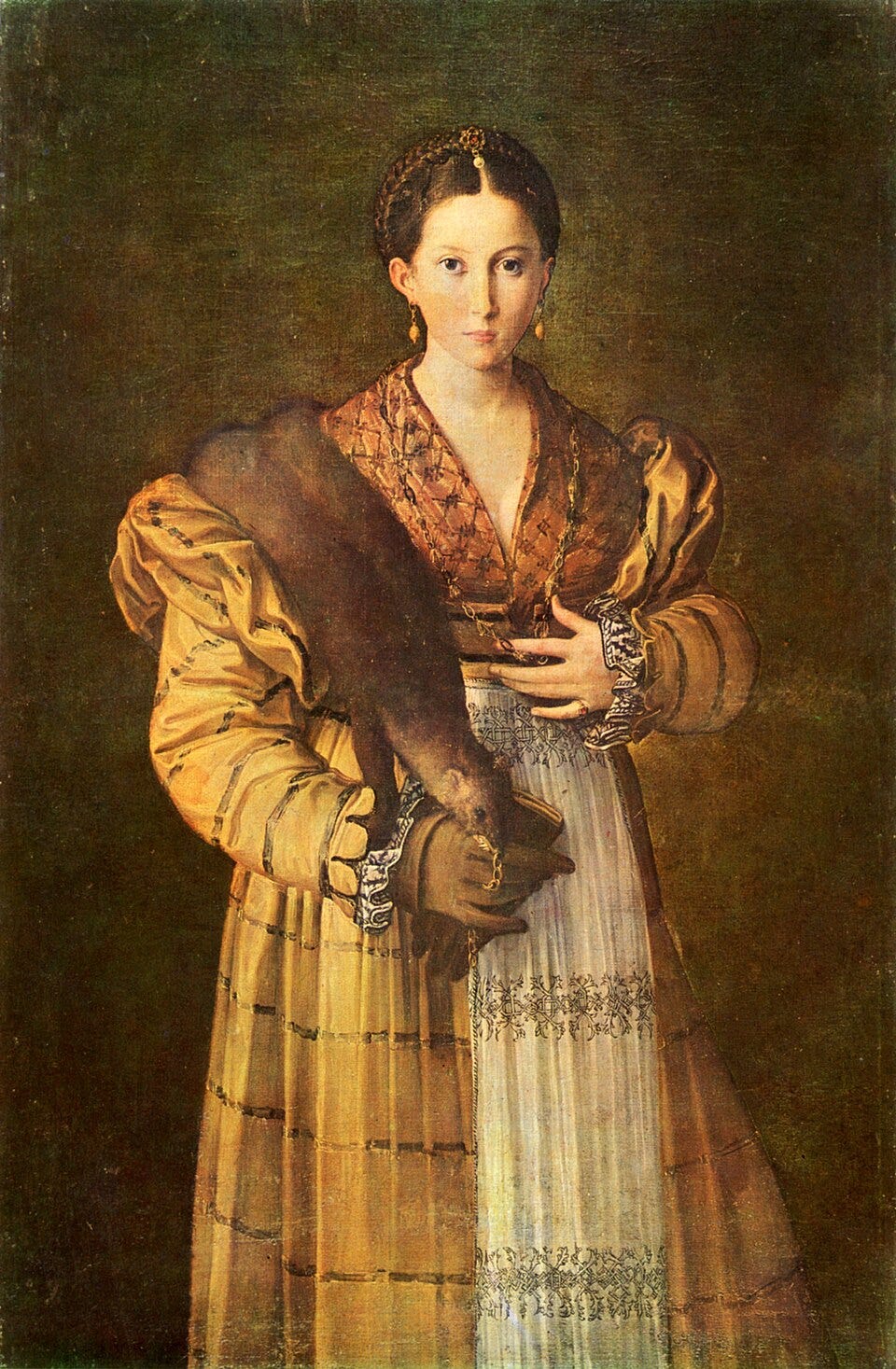
For over a century, fashion historians and museums confidently gave them a rather unglamorous name: the “flea pelt” (Flohpelz). The accepted narrative was that these expensive fur accessories served a highly practical function as parasite traps, drawing fleas away from the human and into the luxurious animal fur.
However, as a succession of brilliant historians and costume scholars have revealed, the true story behind these garments has absolutely nothing to do with hygiene. The unraveling of this mystery requires us to look at a fatal linguistic error, and more importantly, to listen to the scholars who decoded the profound magic and hopes woven into Renaissance women’s fashion.
The “Flohpelz”: A Fatal Nomenclature
The unraveling of the flea pelt myth began with the German art historian Günther Schiedlausky. In his 1972 research, Schiedlausky dug into primary sources and realized that the term Flohpelz did not exist in any contemporary source while the accessory was actually in fashion. He delivered the definitive blow to the myth, writing:
“This word is in fact only an invention of the late previous century”.
The term was actually coined in 1894 by an Austrian weapons historian named Wendelin Boeheim. Through the work of costume historian Max von Boehn in 1928, the Flohpelz became deeply entrenched in the fashion history canon.
From Germany, this fatal nomenclature infected the English-speaking world. In her 1994 article “On So-Called ‘Flea Furs’”, the historian Elspeth M. Veale took direct aim at this translation, noting that the continued use of the English term “flea pelts” was “exceedingly regrettable”.
The Practical Purpose Problem
With the flea trap theory thoroughly debunked, historians were left with a glaring mystery. It was the costume historian Tawny Sherrill who famously posed the pivotal question in her 2006 study: “But if not flea pelts, then what?”. Sherrill completely dismissed the practical pest control idea, noting that like any “good fashion,” these accessories pursued “absolutely no practical purpose”.
She pointed out that Italian museums and researchers were largely unaffected by the “flea pelt” discourse because they simply continued to call the accessory by the name of the animal it was made from: the Zibellino (Italian for sable).
To find the true meaning of one of the “most curious fashions of all time”, scholars had to look at the socio-cultural anxieties of the era. The historian Jacqueline Marie Musacchio provided the key in 2001. She grounded the accessory in the profound post-plague anxieties of the era, explaining that it was an expression of a late 15th-century material culture that focused intensely on population growth. The Zibellino was, in fact, a highly valuable talisman for pregnancy and fertility.
The Magic of the Weasel
To understand why a marten or weasel pelt was believed to aid in pregnancy, Musacchio and Sherrill looked at how Renaissance society viewed the natural world through the lens of ancient mythology and Christian syncretism.
Musacchio highlighted the myth of Heracles (Hercules), who was only born because a maid named Galanthis used trickery to aid the delivery. As punishment, the goddess Hera transformed Galanthis into a weasel. Because Galanthis had used her spoken words to ensure the birth, a bizarre biological belief emerged: Renaissance bestiaries claimed that weasels conceived their young through the ear and gave birth through the mouth.
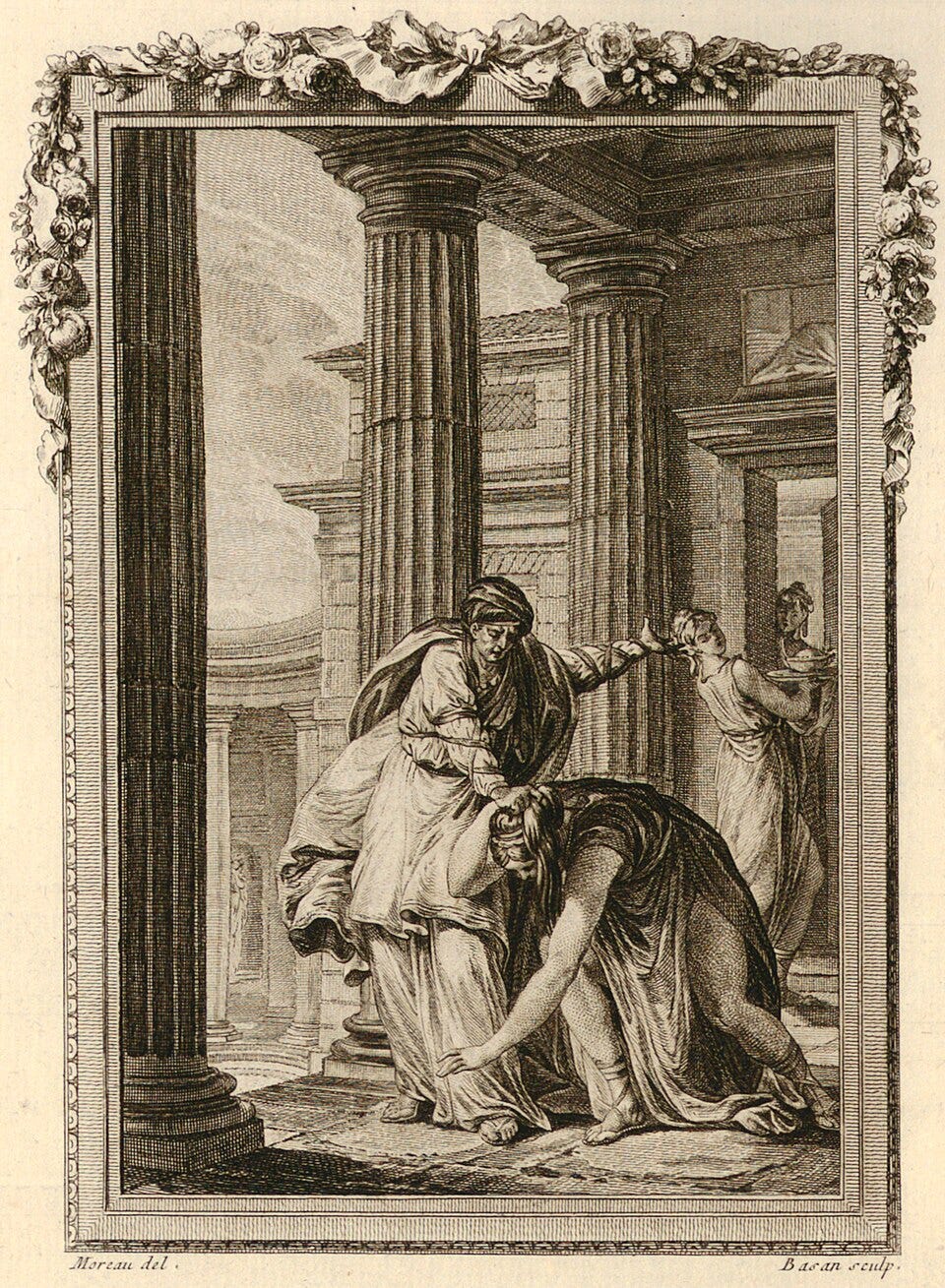
By wearing the pelt of a weasel or its relatives, a Renaissance woman hoped to absorb the animal’s mythical traits to ensure a simple, painless, and immaculate delivery.
Sherrill then connected this ancient myth to Christian theology. The concept of conceiving through the ear perfectly mirrored the Virgin Mary, who miraculously conceived Jesus through the words spoken by the Angel of the Annunciation. Sherrill points out that this symbolism is hiding in plain sight: a spectacular 1550s Zibellino currently housed at the Walters Art Museum features a golden head with dramatically oversized ears, an open mouth, and a white dove resting above its snout—an unmistakable visual reference to the Annunciation.

Cooling Balls and Perfume: Beyond the Visual Surface
While the symbolic mystery was solved, the physical reality of these objects still puzzles researchers today. As the contemporary historian Sarah-Maria Schober reminds us in her 2021 work, we must not stop our analysis at the mere “visual surface of symbolism and representation” in Renaissance portraits. Schober demands we look at the physical reality of the pelts—the “materiality and the sensuality of the objects and thus at their everyday meaning for their owners”.
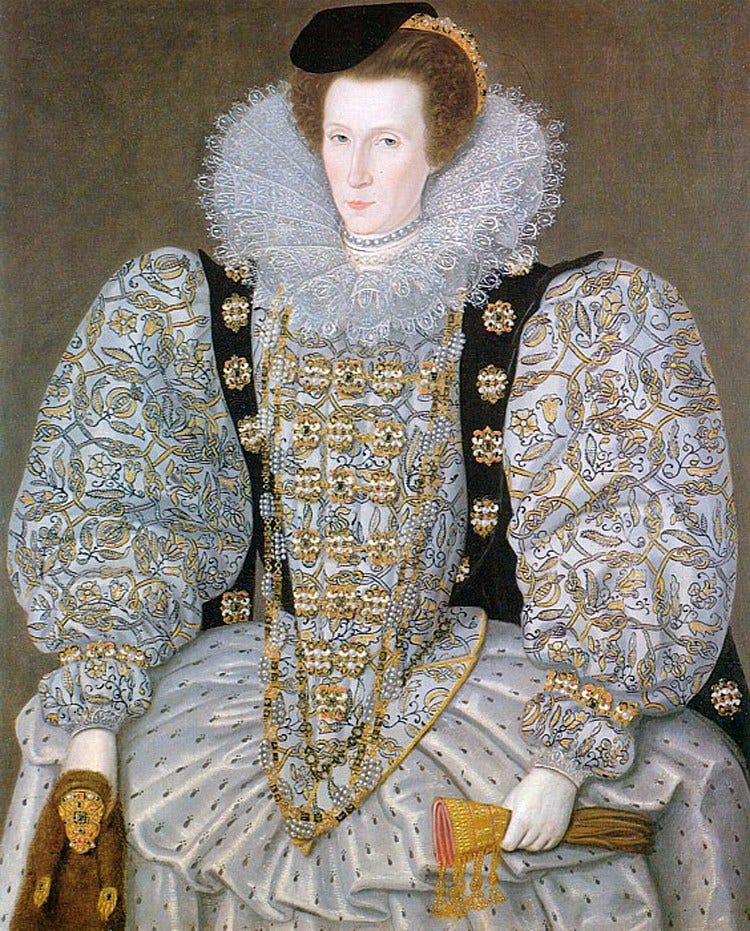
Because of this, speculation continues to swirl around their tactile, everyday functions:
The Cooling Ball Theory: Many Zibellini were fitted with heavy heads carved from solid rock crystal . Schiedlausky (in his 1984 research) suggested that these dense stones functioned as “cooling balls” (Kühlkugeln). Aristocratic women may have held these cold, heavy crystal heads in their hands to keep them cool and dry during polite conversation. This theory is still cited today; as recently as early 2023, an exhibition at the Museum Schnütgen in Cologne presented rock crystal marten heads under this exact premise.
The Perfume Pomander Theory: Schober herself proposes another fascinating, though “admittedly speculative,” thesis: she suggests that Zibellini might have served as perfume carriers.
Schober notes that historical fashions possess a “hermeneutic ambivalence” because “they appear simple and enigmatic at the same time”. She summarizes the entire historiographical endeavor beautifully:
“Fashions are anything but simple. They are worth not just being satisfied so easily”.
The Zibellino eventually fell victim to the rise of modern natural history in the 19th century, as zoologists debunked the myth of the weasel’s miraculous birth (a belief that Aristotle already refuted in his Generation of Animals), erasing the accessory’s religious symbolism. But thanks to the meticulous work of these scholars, we can finally look past the mistranslated myth of the pest controller and see the Zibellino for what it truly was: a poignant, multi-sensory, and magical talisman worn by women navigating the perilous journey of motherhood.
Ultimately, male historians were so used to the idea that clothing must have a practical purpose that they were completely blind to the symbolic language of women's fashion. Unable to grasp the magic of the Zibellino, they simply invented a crude, utilitarian excuse for a beautiful talisman they couldn't understand.
A Bold Speculation: The Ultimate Heroic Fashion Statement
We know from the research of Tawny Sherrill that this fascinating fashion trend had its origins among the people of Milan. But why did the trendsetting aristocratic women of the Renaissance—such as the famous d’Este sisters, who were deeply connected to the Milanese court—embrace this specific animal as a vestimentary animal?
We can make a bold, fascinating speculation by looking at the ultimate hero of antiquity: Hercules (known as Ercole in Renaissance Italy).
Hercules was a figure of massive cultural importance in Milan and among the ruling families of the era (such as the patriarch Ercole I d'Este or Ludovico Sforza). According to myth, Hercules wore the very first “vestimentary animal” when he draped himself in the indestructible pelt of the Nemean Lion. By wearing the beast he had slain, he absorbed its power and projected an image of absolute invincibility.
It is highly likely that Renaissance women were doing exactly the same thing, but through a distinctly female lens.
Remember the myth of Galanthis? The great Hercules only existed because a maid tricked the gods to ensure his safe birth, a heroic act that resulted in her being transformed into a weasel.
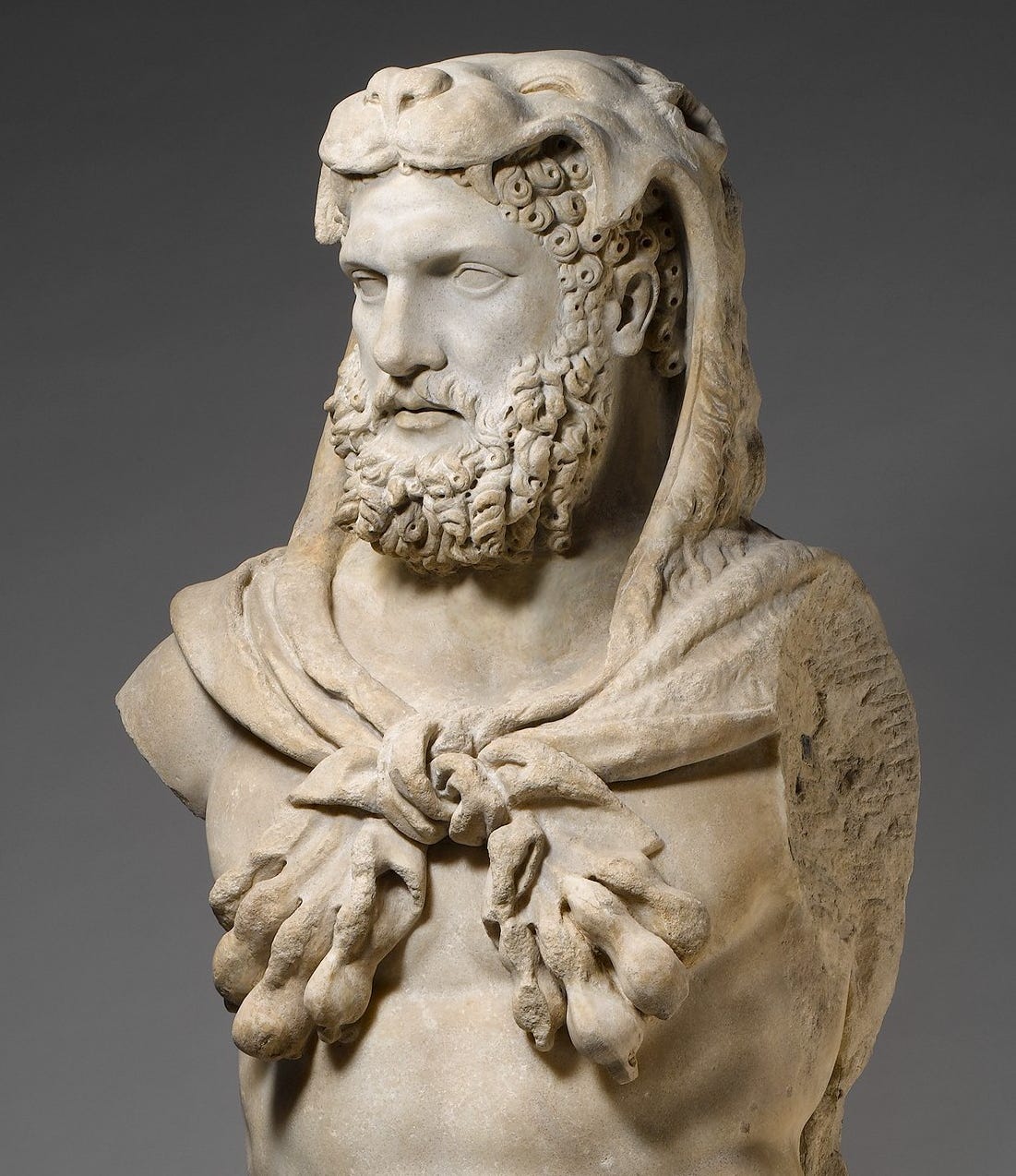
Just as Hercules wore the Nemean Lion to claim its physical power and invulnerability , Renaissance women draped themselves in the Zibellino—the symbol of the weasel that made Hercules’s birth possible—to claim its power over childbirth.
They were not just wearing a fur accessory; they were claiming the magical property of a simple, pain-free, and immaculate delivery. In doing so, these women took the ultimate masculine symbol of heroic fashion—the animal pelt—and reclaimed it to protect themselves during the most dangerous and vital battlefield a Renaissance woman could face: motherhood.
"A woman's war is in the birthing bed." Randyll Tarly, A Feast for Crows