A Modern Inferno
When Kylie Jenner attended Schiaparelli’s Spring/Summer 2023 couture show with a life-sized, hyperrealistic lion’s head affixed to her dress, the digital discourse fractured. The immediate, visceral interrogation that flooded social media—”Is it real?”—betrayed a deep-seated cultural anxiety.
While the animals were entirely synthetic masterpieces of “faux taxidermy,” the shock they elicited was genuine. Designer Daniel Roseberry was intentionally engaging with a specific, historically charged concept: the “vestimentary animal.”
I propose the term vestimentary animal to define a garment or accessory where the original form and ontic shape of the animal are intentionally preserved. Distinct from a fur coat or leather goods, where the animal is processed into an abstract textile, the vestimentary animal remains recognizable as the animal. It prominently features the head, facial expressions, and often the limbs and tail, creating a lifelike or “reanimated” appearance.
Classic examples include the full-head fox stoles of the 1920s. A striking pop-culture example is the vulture-topped hat worn by Professor Snape’s boggart in Harry Potter and the Prisoner of Azkaban—a key costume piece by Jany Temime that perfectly exemplifies the concept. Roseberry’s “Inferno” collection functioned as a modern revival of this idea. However, to understand the mechanism of this shock, one must examine the historical trajectory of the animal body in fashion, ranging from the Victorian avian crisis to the anti-fur movements of the late 20th century.
1880–1920: The Crusade Against “Murderous Millinery”
The late 19th century was defined by a paradoxical relationship with the natural world. While Darwinian theory was reshaping the understanding of species extinction, fashion saw the rise of “murderous millinery”—the practice of adorning women’s hats not merely with feathers, but with entire taxidermied birds.
This fashion created a profound cognitive dissonance regarding the dead animal, which was treated in two diametrically opposed ways based on its location:
The Corpse: On a woman’s hat, the same object became a “bird corpse” (Vogelleiche). It was viewed as grotesque, immoral, and a “massacre”.
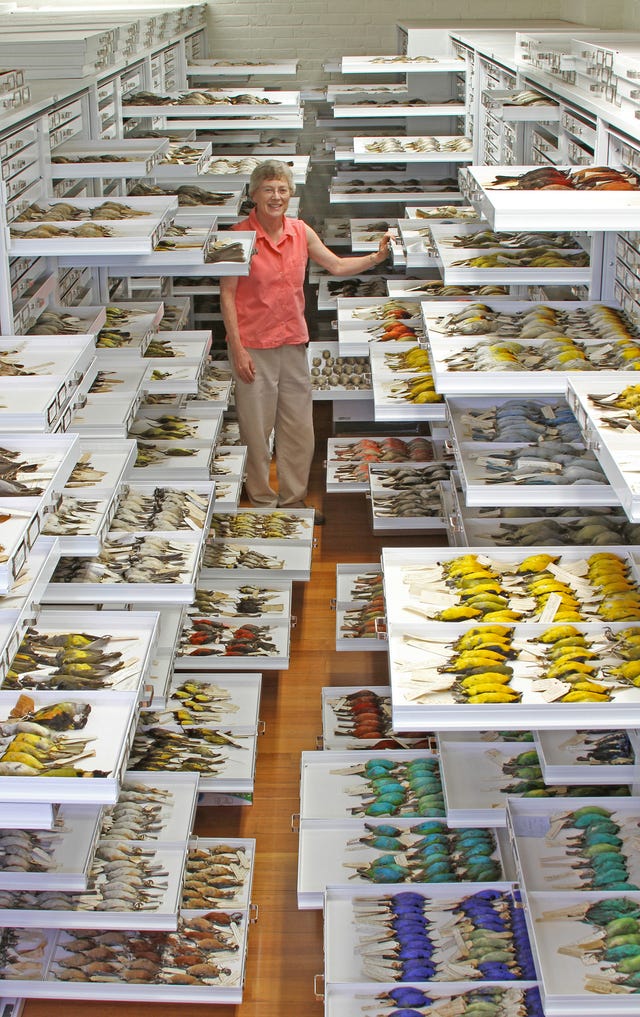
The Specimen: In the museum, the taxidermied bird was a “bird skin” (Vogelbalg). It was viewed as scientific, educational, and morally neutral within a “natural history setting”.
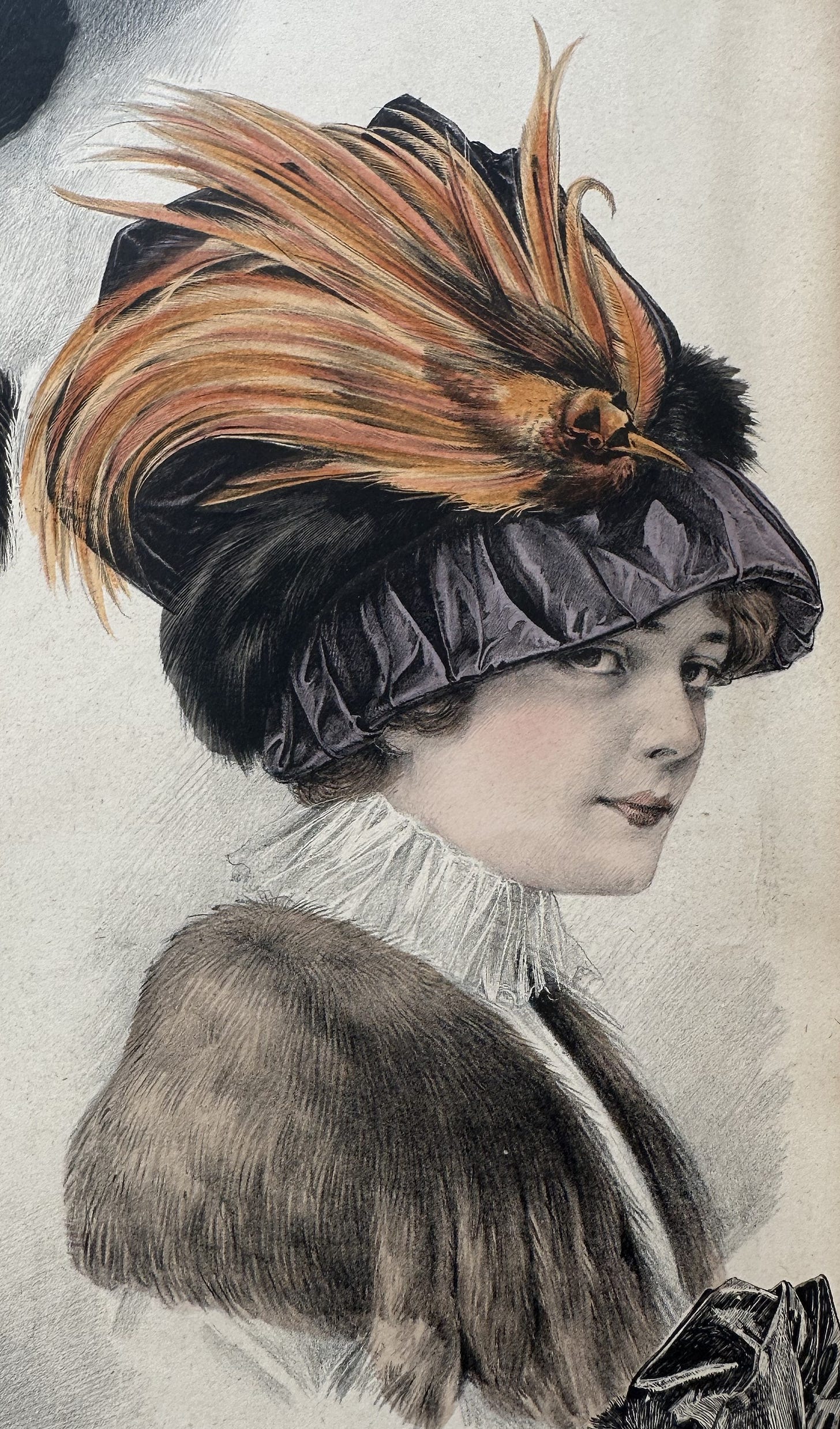
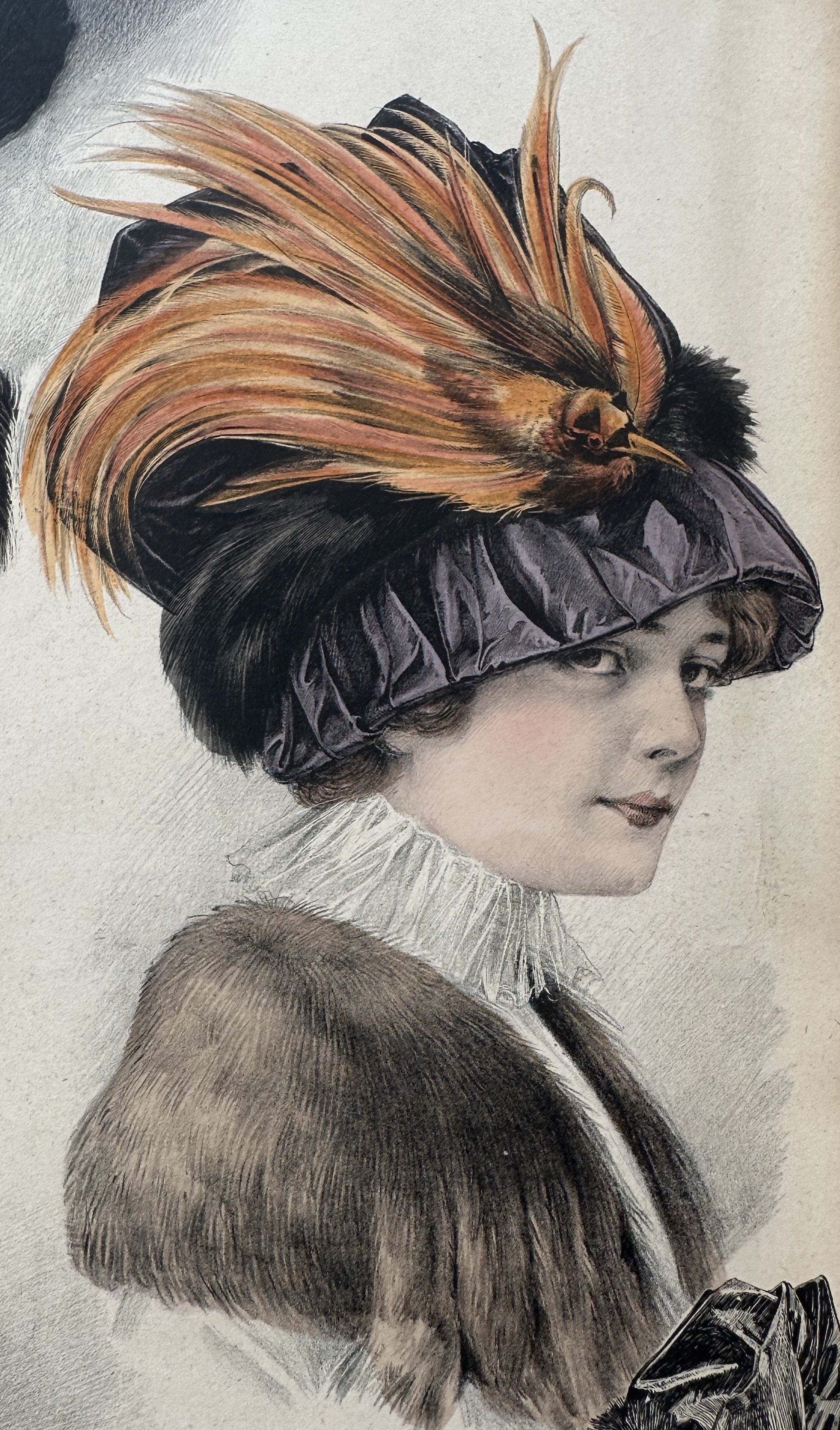
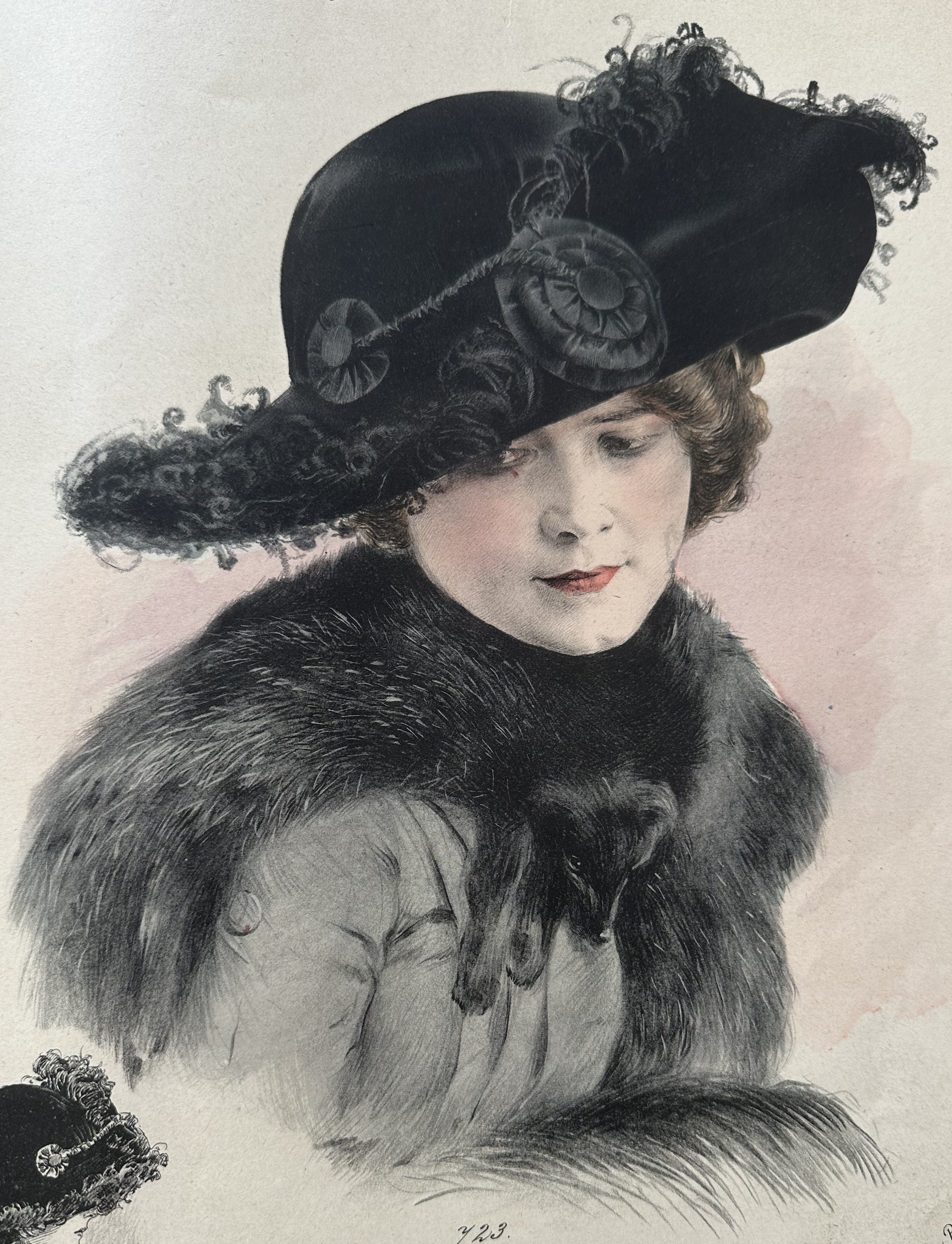
Fashion at the Height of the Crusade: A richly illustrated fashion plate (c. 1900) showing the luxurious use of both the highly controversial feather plumes on the hat and the largely uncensured fur stole worn by the same woman.
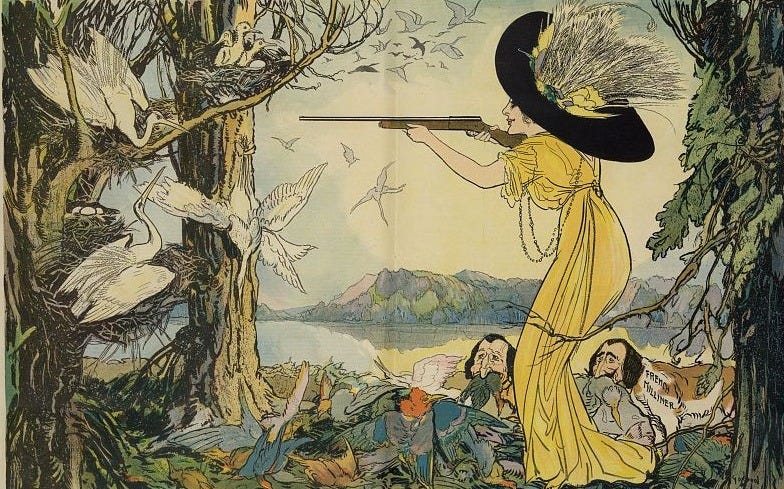
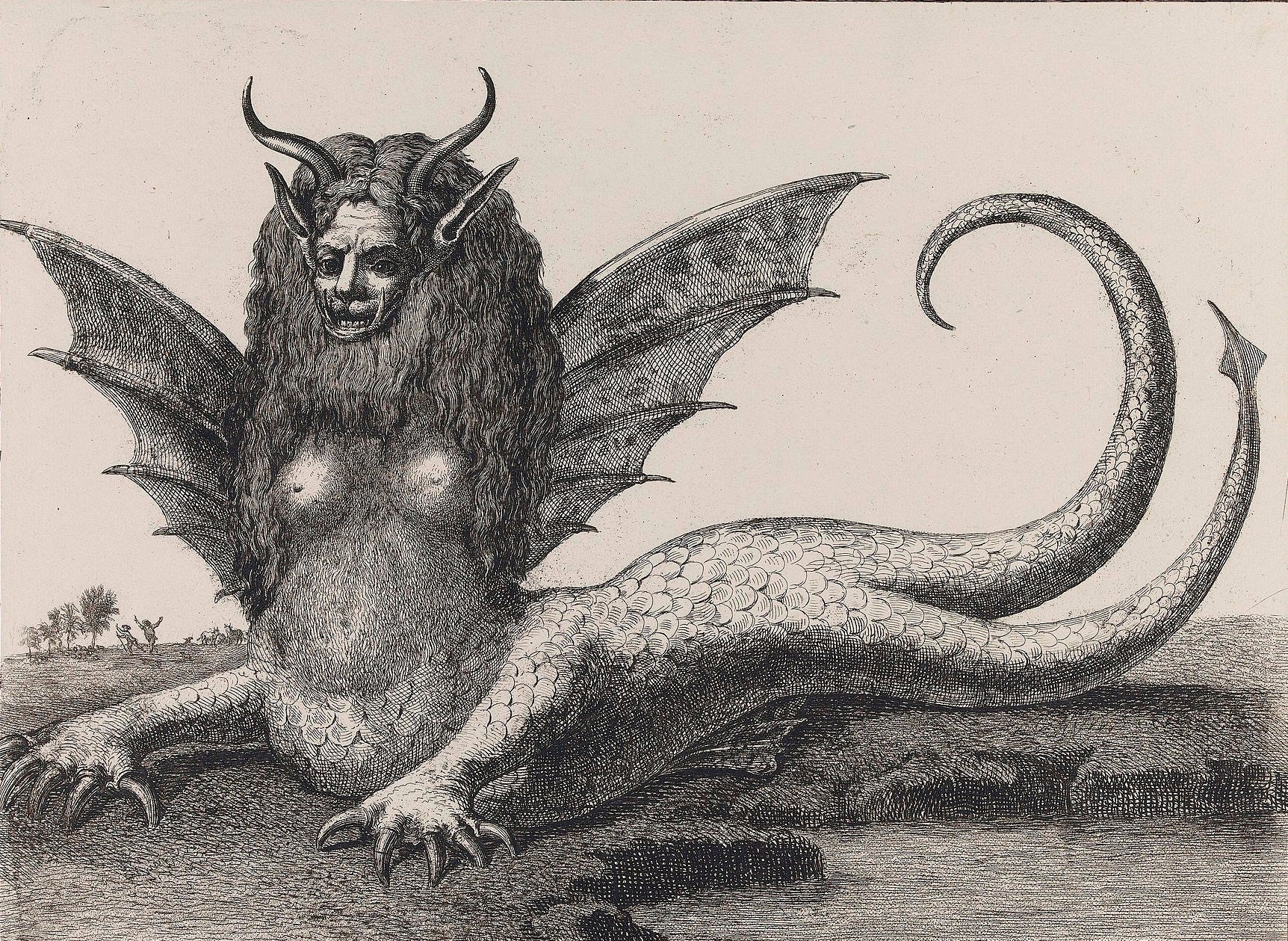
The resulting backlash, often termed the “Plumage Crusade”, was arguably less about the preservation of birds and more about the regulation of women. The rhetoric was deeply misogynistic. Women who wore vestimentary animals were depicted as savage, vain, and irrational. Contemporary caricatures, such as the 1892 Punch illustration “A Bird of Prey,” depicted the fashionable woman as a monstrous Harpy—a “femme fatale as a threatening predator”.
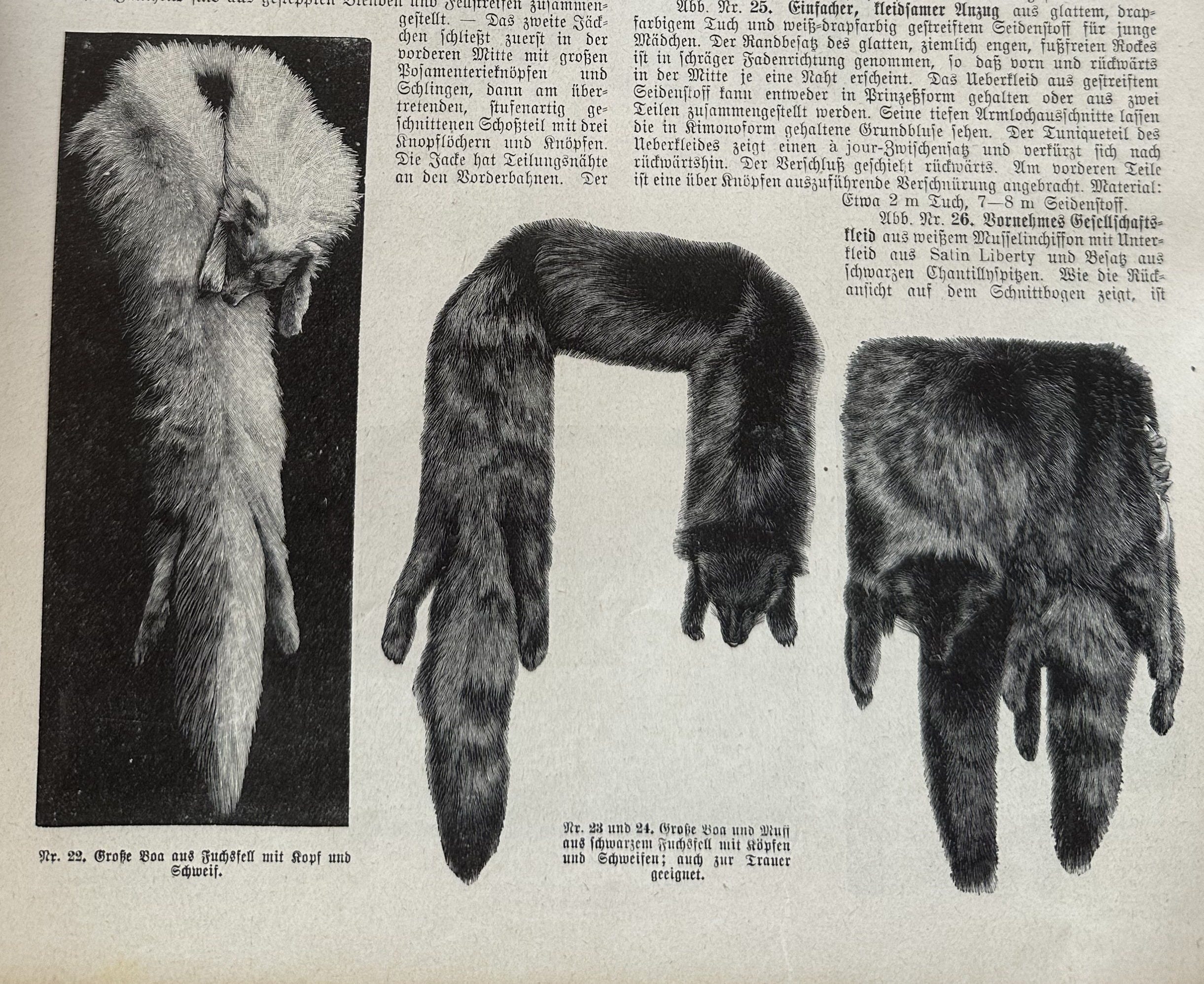
Significantly, this moral outrage was highly selective. During the height of the feather controversy, the wearing of fur—including vestimentary animals like fox stoles complete with heads and glass eyes—remained largely acceptable. As noted in my research, fur was associated with “domesticated” luxury or function, whereas the exotic bird was viewed as “wild”. The fox stole was anthropomorphized as a “furry friend” or “portable pet” draped over the shoulder, escaping the censure directed at the “bird corpse” until much later.
1970s–1990s: The War on Fur and the Disappearance of the Animal
The moral lens shifted drastically in the latter half of the 20th century. The modern, global anti-fur movement gained significant traction in the 1970s. A pivotal moment was actress Brigitte Bardot’s highly publicized 1977 campaign against the Canadian whitecoat seal hunt. The shocking imagery of the hunt brought the brutality of the fur trade into mainstream consciousness. While this activism successfully damaged the industry, it also controversially conflated the large-scale commercial hunt with the traditional, subsistence-based practices of Inuit communities, who suffered devastating economic and cultural consequences.
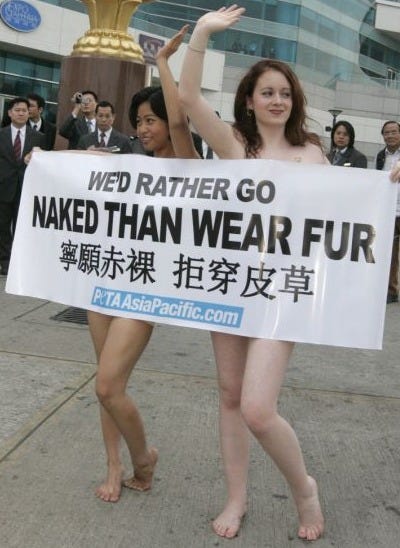
This wave of activism set the stage for the 1980s. With the founding of PETA (People for the Ethical Treatment of Animals) in 1980, the campaign crystallized, moving from a single issue (seals) to a systemic attack on the entire luxury fur industry.
Much like the Victorian anti-plumage movement, the anti-fur campaigns of the 80s and 90s utilized misogynistic tropes to shame the consumer. PETA’s infamous slogan, “It takes up to 40 dumb animals to make a fur coat. But only one to wear it,” targeted the “trophy wife” and “luxury woman,” directly echoing the Harpy archetype of the previous century.
The fashion industry’s response to this sociopolitical pressure was one of camouflage. To mitigate guilt, the animal body was abstracted. Fur was sheared, dyed, and processed until the animal was “no longer recognizable”. Consequently, the vestimentary animal—the visible head, the staring eyes, the claws—vanished from the mainstream. The literal face of the animal became too confrontational for a society grappling with the ethics of consumption.
1997–2023: Reclaiming the Beast
The re-emergence of the vestimentary animal in high fashion serves as a “vestimentary text”—a critical commentary on this fraught history. Designers such as John Galliano and Alexander McQueen began to resurrect the archetype of the Harpy, not to condemn her, but to empower her.
In his 1997/98 “Eclect Dissect” collection, Alexander McQueen sent a model down the runway crowned with vulture skulls, explicitly referencing the Victorian “Bird of Prey” caricature. Similarly, John Galliano’s “Masai” collection for Christian Dior (Fall/Winter 1997) utilized taxidermy to evoke a predatory, untamed femininity. These designers deconstructed the misogynistic myth of the “avian archetype,” forcing the audience to confront the predator rather than the victim.
Daniel Roseberry’s 2023 “Inferno” collection for Schiaparelli represents the apex of this historical lineage. By creating faux-taxidermy so hyperrealistic that it triggered a moral panic, Roseberry recreated the cognitive dissonance of the 19th century.
Crucially, PETA—the organization that had perfected the anti-fur shaming campaign—defended the collection. Its founder, Ingrid Newkirk, praised the look, stating it “celebrates the beauty of lions” and could be seen as “a statement against trophy hunting”. This highlights the evolution of the vestimentary animal: Roseberry’s work is a pastiche. He is not celebrating the death of the animal; he is reclaiming the concept of the “trophy” and, by extension, the image of the woman as the predator.
The history of vestimentary animals reveals that these debates are rarely solely about zoology. Rather, they are reflections of “what ideas the respective society has about women”. Alexander McQueen forced the viewer to reckon with the 19th-century Harpy; Daniel Roseberry forces the viewer to reckon with the 21st-century Trophy. Both designers understand that fashion’s power lies in its ability to reanimate cultural anxieties and display them, quite literally, on the human form.
The Future: Hyperreal Harpies
Roseberry’s collection, by proving the affective power of faux taxidermy, has opened a new trajectory for the vestimentary animal. The future of this trend is no longer tied to the material sourcing of animals, but to the ethics of their representation. As technology and bio-fabrication create increasingly hyperrealistic “surrogates,” the debate will evolve. The moral question will shift from “Is it real?” to “Does it matter if it’s fake?” We are entering an era where fashion can re-introduce the predatory “trophy” without the “murder,” forcing a new confrontation with what we find beautiful, what we find threatening, and why the animal form—real or simulated—remains fashion’s most potent and challenging symbol.